Grades K-2 Wild Horse and Burro Curriculum
The High School Wild Horse and Burro Curriculum is organized into the five modules represented by the clickable tiles below. Foundational material is presented in Module 1, and the most complex material in Module 5. Each module builds on the previous modules. However, if you familiarize yourself with our background material and four place-based case studies, you will be prepared to include important details not contained in a lesson plan, and will ensure your teaching content is accurate.
Within each module, you will find introductory information and another set of clickable tiles for an array of Sub-Modules. This allows for a high level of organization and easy-to-find materials.
Each content module contains lessons for a variety of subject area specializations, so explore! There may be more than one lesson for a single topic to address multiple subjects. However, we do not provide lessons for every subject within every unit. Rather, we create art lesson plans where there is a great opportunity for teaching through art on a particular topic. We hope that students will learn about wild horses and burros through a variety of classes, giving them a broader exposure to the topic.

K-2 Module 1: Systems Thinking and Rangeland Ecosystems
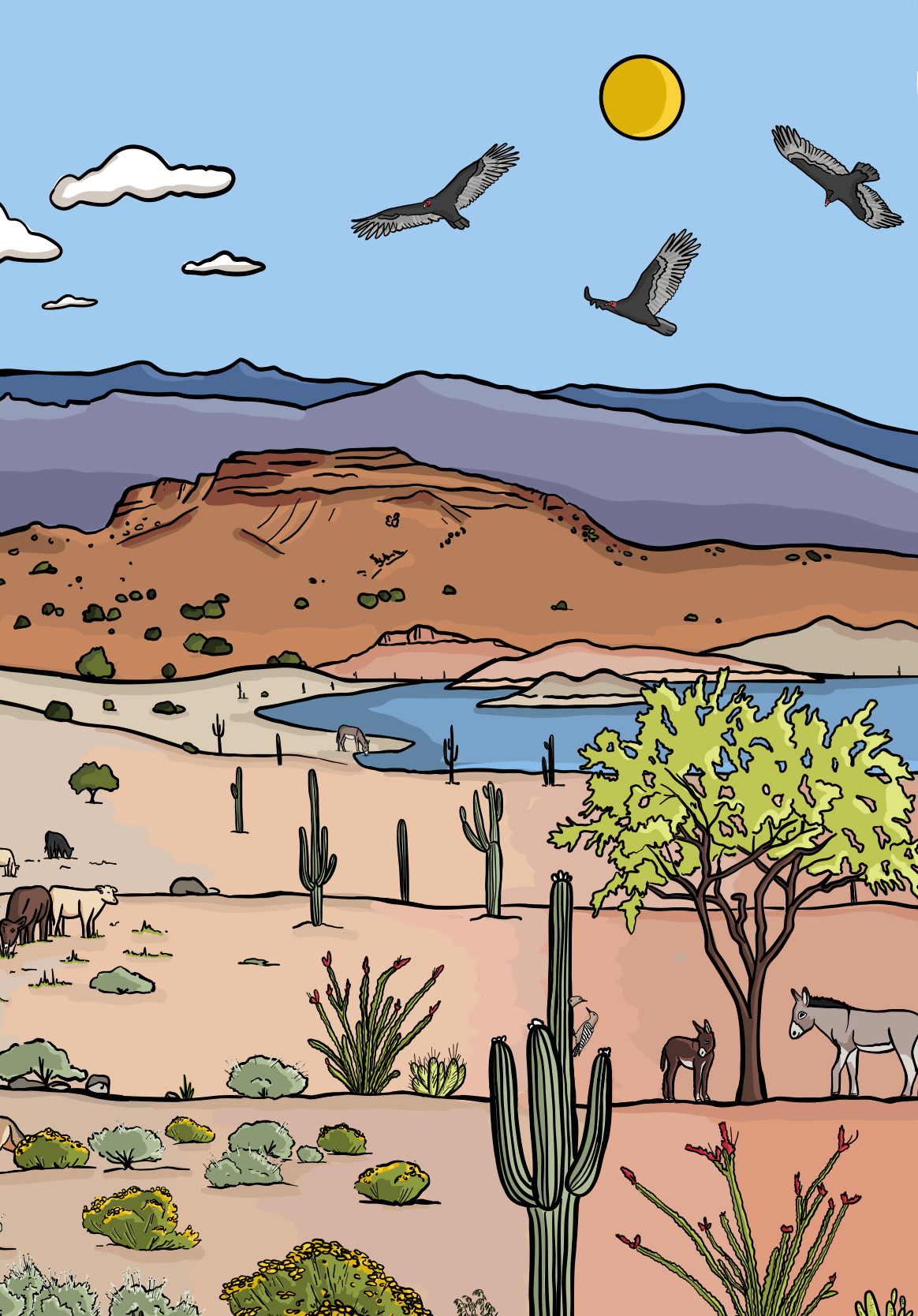
This module introduces students to the concept of Systems Thinking, and how elements of systems relate to and affect each other. It also introduces students to Rangeland Ecosystems, ecosystems where livestock and wildlife roam widely to find food and water. Wild horses and burros are found in rangeland ecosystems, so understanding these ecosystems is an important foundation for learning about their history, biology, behThis module introduces students to the concept of Systems Thinking, and how elements of systems relate to and affect each other. It also introduces students to Rangeland Ecosystems, ecosystems where livestock and wildlife roam widely to find food and water. Wild horses and burros are found in rangeland ecosystems, so understanding these ecosystems is an important foundation for learning about their history, biology, behavior and management.

K-2 Module 2: History of Wild Horses and Burros in the US West
This module introduces students to the history of wild horses and burros, how the current animals roaming our landscapes were introduced, and the history of the public’s use and engagement with wild horses and burros, and impacts for management decisions made by our federal government to protect these species.

K-2 Module 3: Wild Horse and Burro Biology
This module introduces students to the physical biology of horses, the food they eat, foraging and digestion, water use, reproduction and survival, predation, physical features, and how these features of the current feral species are different from the wild horses and burros that roamed our landscapes before they went extinct 11,000 years ago

K-2 Module 4: Systems Thinking and Rangeland Ecosystems
This module builds upon the previous models to introduce concepts of wildlife management that involve understanding rangelands, their climate features, wild horse and burro biology and behavior. We introduce management approaches including fertility control, gathers, and adoptions, and the implications for ecosystems of managing or not managing wild horses and burros for our native landscapes
K-2 Module 5: Systems Thinking and Rangeland Ecosystems
This module explains important behaviors of wild horses and burros that have implications for their reproductive success, use of resources, interactions between animals of the same species, and patterns of their landscape use